
Joe Hartman: Building What Comes Next—Together
By Molly Watson
When Joe Hartman first visited Western New England University (WNE), it was not a formal interview that sealed the connection. It was a feeling.
A Sunday afternoon. A walk across campus. A sense of energy that felt both grounded and forward-looking.
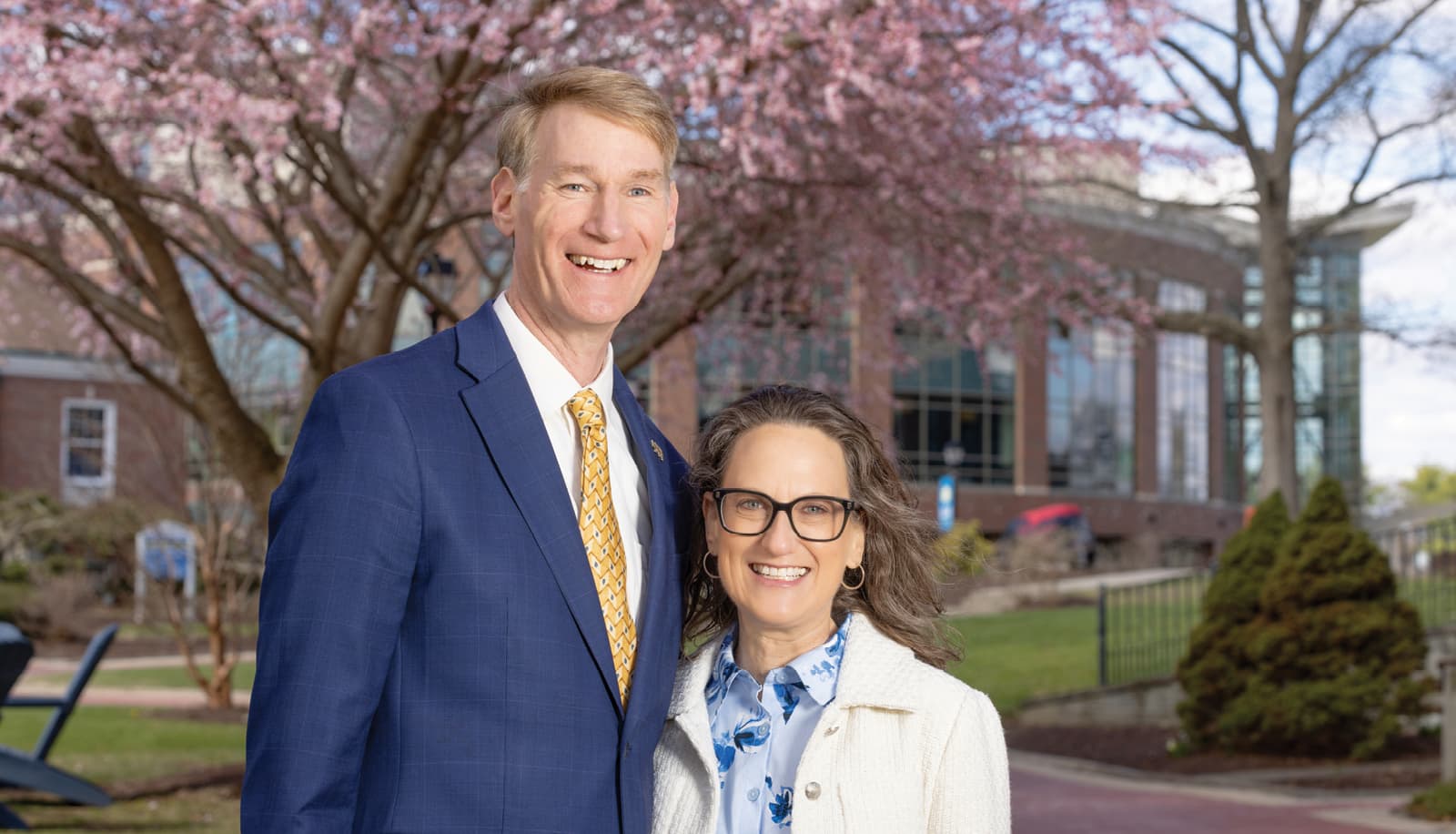
“Driving away, we just had a wonderful feeling,” Hartman recalls. That moment— shared with his wife, Karen—sparked something deeper. What began as curiosity quickly became a conviction.
Now, as Western New England’s seventh president, Hartman brings that same instinct for connection to his leadership—pairing it with the mindset of an engineer, the curiosity of a lifelong learner, and a clear belief in what higher education should deliver.
A Leader Who Shows Up
If there is one theme that defines Hartman’s early days, it is presence.
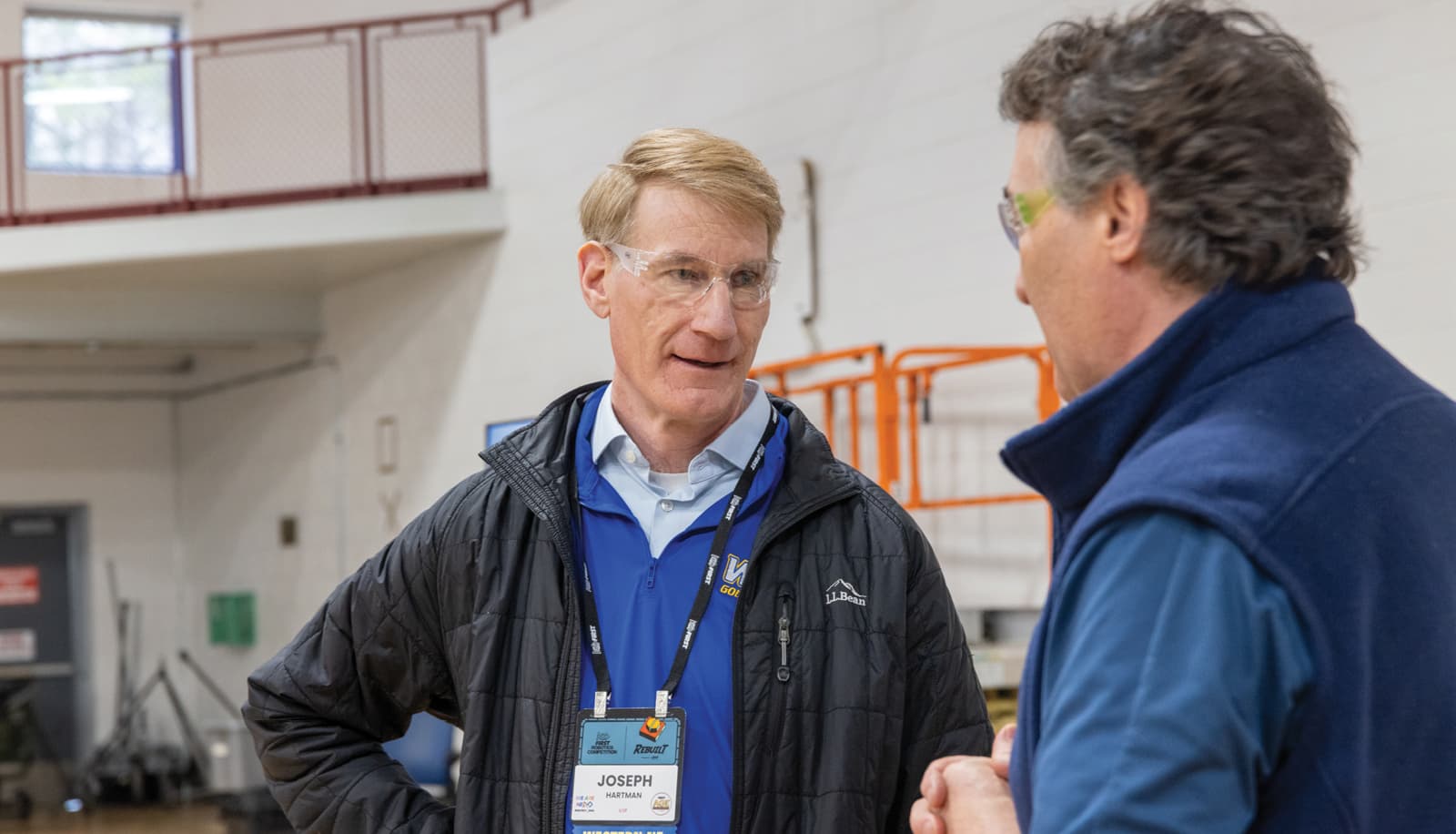
Even before officially stepping into the role, he made a point to be on campus—meeting students, talking with faculty, connecting with alumni, and listening.
“The days of having a year to settle in are over,” he says. “There’s too much happening in higher education. You must show up and get going.”
That approach reflects his broader philosophy: leadership is not about distance—it is about engagement.
Students made that expectation clear during his interview process. In a lively session that stretched for more than an hour, they pressed him with thoughtful questions—primarily centered on one thing: would he be present in their experience?
He did not hesitate.
Today, that commitment is already taking shape—from campus events to informal conversations—grounded in the belief that leadership happens in the everyday moments as much as the formal ones.
An Engineer’s Perspective on Education
Hartman often returns to his roots as an engineer—not just as a discipline, but as a way of thinking.
Engineers solve problems. They build systems. They look at complexity and find clarity.
That mindset carries directly into how he views higher education.
At WNE, he sees something distinctive: a university that blends professional preparation with a broad, liberal arts foundation—what he describes as a powerful combination.
In his welcome message, he reflects a core idea that has shaped his career: a comprehensive education—one that balances intellectual curiosity with practical experience—prepares students to adapt, lead, and grow over time.
It is a model that resonates deeply with him—not only because of his own path, but because of where higher education is headed.
Across the country, institutions are trying to better connect learning with careers. At Western New England, Hartman sees a university already doing that work.
From first-year projects to hands-on learning experiences, students are building, creating, and engaging with real-world challenges from day one.
“I truly believe Western New England can serve as a model [for other schools],” he says.
Making the Value of Education Clear
If there is one issue Hartman returns to often, it is the value of a college degree.
Not in abstract terms—but in real, measurable outcomes.
“We have to communicate the value,” he says.
For Hartman, that means being honest about return on investment while also expanding how we define it.
Yes, careers matter. So do salaries and opportunities. Along with the experiences that shape a person’s life—friendships, confidence, adaptability, and a sense of purpose.
He speaks about this balance with clarity:
“A Western New England education should prepare students for meaningful careers while also offering the kind of experiences that stay with them long after graduation.”
That combination—professional readiness and personal growth—is what he sees as the University’s strength.
Momentum Across Campus
One of Hartman’s early impressions of Western New England was just how much is already in motion.
Across every college, he found new programs, new investments, and new ideas—often supported by external partnerships and funding.
From emerging work in quantum technologies and advanced manufacturing to growth in biopharmaceutical education, cybersecurity, and fintech, the University is leaning into the future.
What stands out to Hartman is not just the innovation—it is the initiative behind it.
“Faculty and staff said, ‘This is where our students need to be,’ and they went out and found the resources to make it happen,” he notes.
His role, as he sees it, is to build on that momentum—connecting those efforts to partners, industries, and opportunities that extend their impact.
A Whole-Person Education
For all his focus on careers and outcomes, Hartman is quick to point out that education is never just about a job.
He knows this from experience.
Long before engineering, there was music— choir, piano, trumpet, marching band, writing—his first job was a journalist, and study abroad—in Germany, both as an undergrad and grad student. Experiences that shaped how he thinks, communicates, and connects.
That perspective informs how he defines success for students.
“It’s not just about professional preparation,” he says. “It’s about everything that happens alongside it.”
Study abroad. Student organizations. Athletics. The arts.
These are not extras—they are essential pieces of a complete education.
And they are part of what makes a place feel like home.
Looking Ahead
Hartman steps into the presidency at a time when higher education faces real challenges—from shifting demographics to rapid technological change.
He does not shy away from that reality.
But he also does not see it as a limitation.
Instead, he frames it as an opportunity.
“Someone has to step up and lead,” he says.
At Western New England, he sees a university well-positioned to do just that— grounded in its mission, confident in its identity, and ready to adapt.
For alumni and donors, his message is both simple and forward-looking:
“There is momentum here. There is a story worth telling. And there is a future worth building—together.”
Or, as he puts it:
“There is real opportunity ahead.”
