

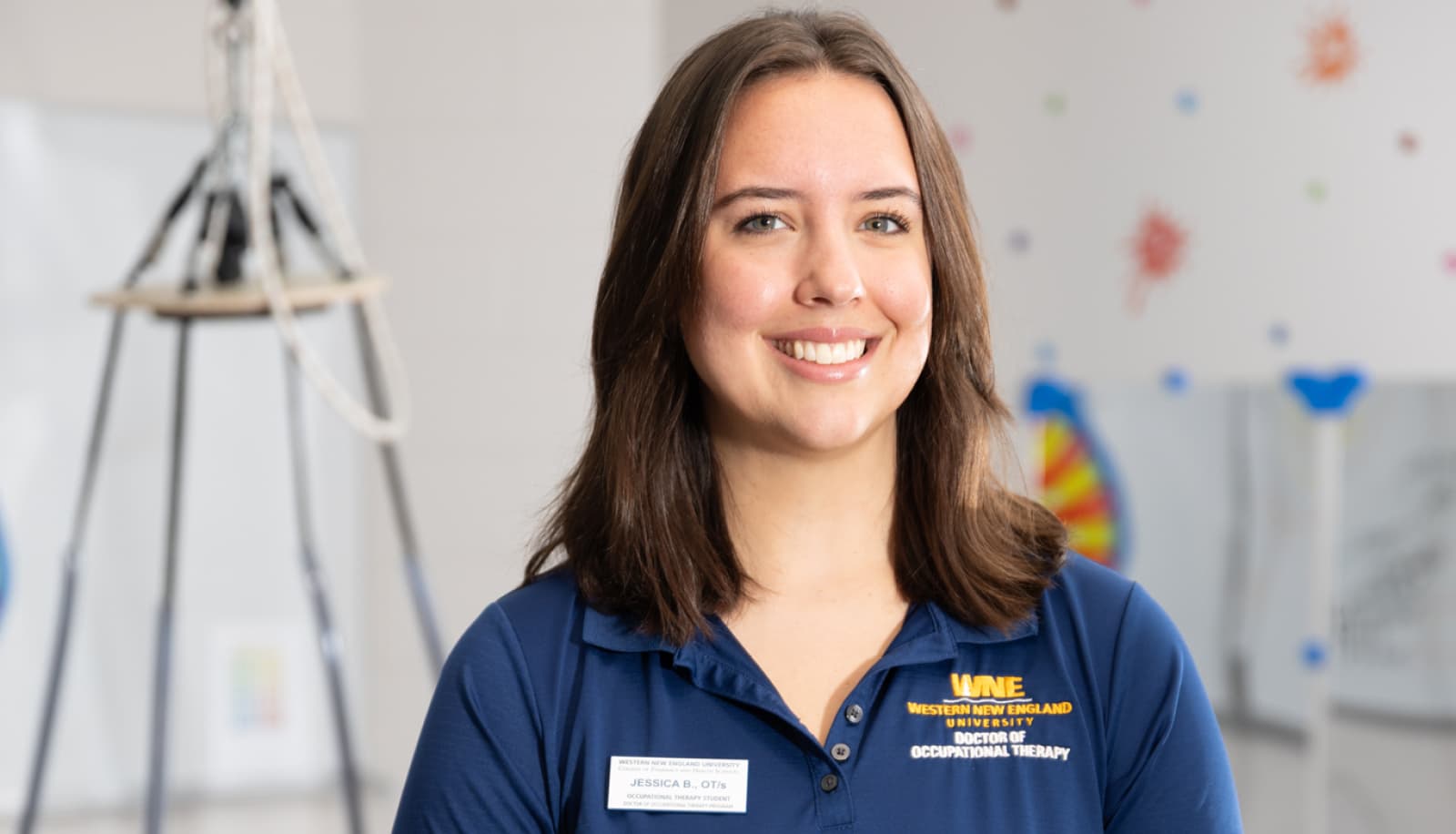
Cub Close-Up: Jessica Brown ’25
By Briana K. Strobel ’17/G’23
Balancing academics, leadership, and service, Jessica Brown ’25 has found her calling in Western New England University’s 3+3 Occupational Therapy Doctoral (OTD) program, where she works to ensure that people of all ages have the support they need to thrive beyond their challenges.
Tell us about yourself and what brought you to Western New England University (WNE).
I’m from Douglas, Massachusetts, and went to Blackstone Valley Tech in Upton, a technical school that doesn’t see a lot of students continuing their education. My older brother came to an open house at WNE when I was a freshman in high school, and I remember really liking the campus. Later, when it was time for me to start looking at colleges, we used niche.com to find schools that would match our goals—WNE came up as my top match. On my tour, my mom told me, “You’ll just know.” The second I stepped out of the car, I felt it—this was where I belonged.
You knew you wanted to work in healthcare. How did you land on occupational therapy (OT)?
Honestly, it wasn’t a straight path. I started out in health science and briefly tried the pre-physician’s assistant (PA) track. I’ll admit that I didn’t apply myself in undergrad at first and struggled with my grades, even though I was thriving socially. I was class president my sophomore year, an orientation group leader (OGL), and heavily involved in student government. It was during a student government meeting, Assistant Dean Amy Burton pulled me aside and said, “You’d make an amazing occupational therapist.” At the time, I didn’t even know what OT was! I looked it up, and it clicked—this was what I wanted to do.
To make this transition official, I had to switch from health science to health studies, which meant some of the harder classes I’d already taken, like organic chemistry, weren’t required. But once I had a clear focus, my academics turned around, and by junior year, I was really locked in on becoming an occupational therapist.
Looking back, what were some of your favorite experiences as an undergrad?
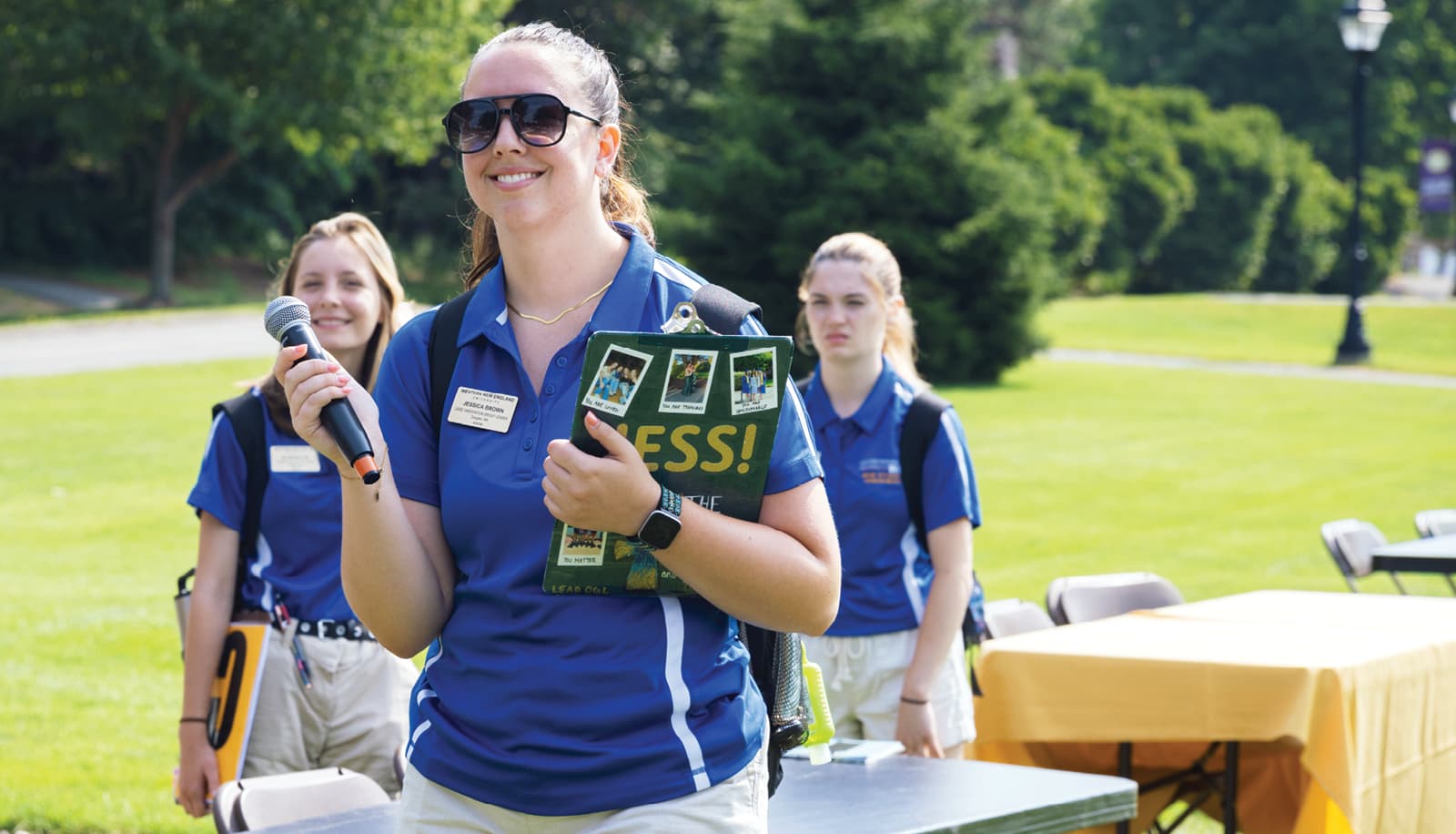
Peer advising was the light of my life. I loved mentoring students and connecting with faculty. Orientation was also huge for me—being an OGL and then a lead OGL helped me find my voice as a leader. While my study abroad trip to Sorrento, Italy, was such a formative experience that it’s still one of the best things I’ve ever done.
You found your way into leadership roles, what drew you to those opportunities?
In high school, I was more into sports, but I did compete nationally in SkillsUSA, which taught me advocacy. At WNE, I wanted to make a difference, so I joined Freshman Council, ran for class president, which kept creating opportunities for me around campus. I realized that being in a leadership role wasn’t about being the loudest voice, it was about lifting others up.
How have you stayed involved as a graduate student in the OTD program?
On campus, I’m co-marketing chair for the B.E.A.R. P.A.W. Center—WNE’s on-campus pro bono occupational therapy clinic that provides free services to both children and adults. I’m also chair of the OT Student Leadership Society, a graduate assistant, and am still active in the athletics recreation department.
What has stood out to you the most about your experience in the OTD program so far?
The camaraderie. My cohort has only 18 students, and we’re like a family. The professors, many of whom are practicing OTs, are incredibly supportive. They’ve exposed us to unique opportunities, like observing hippotherapy, which uses horseback riding as a therapeutic tool. The introduction to this approach of occupational therapy intrigued us so much that it has shaped the research we’re conducting, specifically how hippotherapy impacts neurological recovery. It’s an emerging field with limited research, but early studies show benefits in posture, gait, and even mental health. I’m also working on my doctoral capstone project, which focuses on community-based OT programs in Springfield. One of my main focuses is helping people in underserved areas improve quality of life through life skills and meaningful activities.
What does working in the B.E.A.R. P.A.W. Center mean for you?
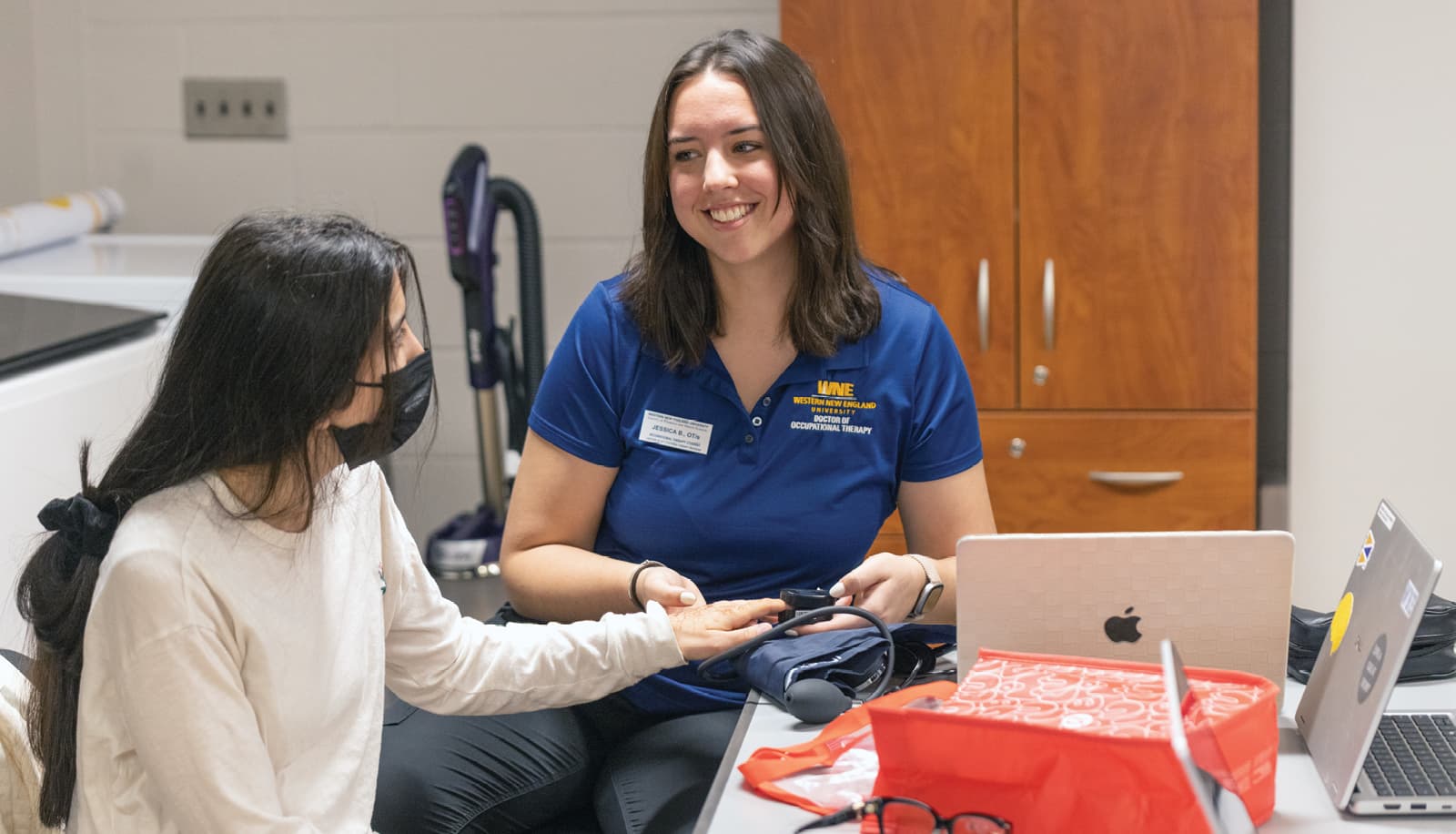
For me, it’s been an incredible way to build confidence as a future clinician while making a real difference in people’s lives. We rotate through pediatric and adult cases, from kids with developmental challenges to adults recovering from strokes or brain injuries. It’s completely student-run under the guidance of licensed OTs, which means we design and carry out treatment plans ourselves. It’s given me the confidence to know I’ll be ready for my external fieldwork.
Placement is a part of the program—do you know where yours is?
Yes! Next year I’ll complete two 12-week fieldwork rotations: one in inpatient mental health at Butler Hospital in Rhode Island, and another in acute care at the University of Iowa Medical Center. Placements are a core part of the OTD program—we spend full semesters working alongside licensed OTs in real clinical settings, which prepares us to step confidently into practice after graduation.
Outside of your studies and campus life, what keeps you busy?
A big part of my life is InterVarsity, a college ministry in Springfield. We bring together students from seven or eight local colleges and host a large gathering called Encounter each month that draws more than 100 students. I serve on the host team, helping plan events, run icebreakers, and make sure everyone feels at home. It’s been a huge source of community and joy for me. I also attend a church in downtown Springfield, which has opened my eyes to the challenges the community faces and has deepened my desire to bring OT services into underserved areas.
And when I’m home during breaks, I work as a certified nursing assistant (CNA) in an assisted living facility. I’ve been at the same facility for four years, and I always tell people I love my “grandmas.” That work has given me perspective on aging, independence, and the importance of slowing down and making people feel valued.
What do you hope to bring to your future patients?
I want people to feel seen and valued. My undergrad struggles taught me resilience, and my CNA work in the assisted living facility has taught me the importance of slowing down and listening. For me, OT isn’t just about physical recovery; it’s about being present during someone’s hardest moments.
What advice would you give to undergrads considering OT or another healthcare field?
Make sure your heart is in the right place. Healthcare isn’t a backup plan—it has to be your plan. And you can’t pour from an empty cup, so build strong support systems. The work is demanding, but it’s also so rewarding if it’s what you’re truly called to do.
What does the WNE community mean to you?
It means home. I know I’ll always be welcomed here, and honestly, I could see myself returning as a professor one day. The community is overwhelmingly positive—it’s hard to walk across campus without running into someone you know.
