

A Sparkling Path
How Madison Marilla Turned her WNE Education into a Platform for Inclusion
By Emily Mead Larsen G’07
From psychology classes to global screens, Madison Marilla ’20 leverages her WNE roots to champion autism awareness, blending creativity and resilience into an inspiring success story.
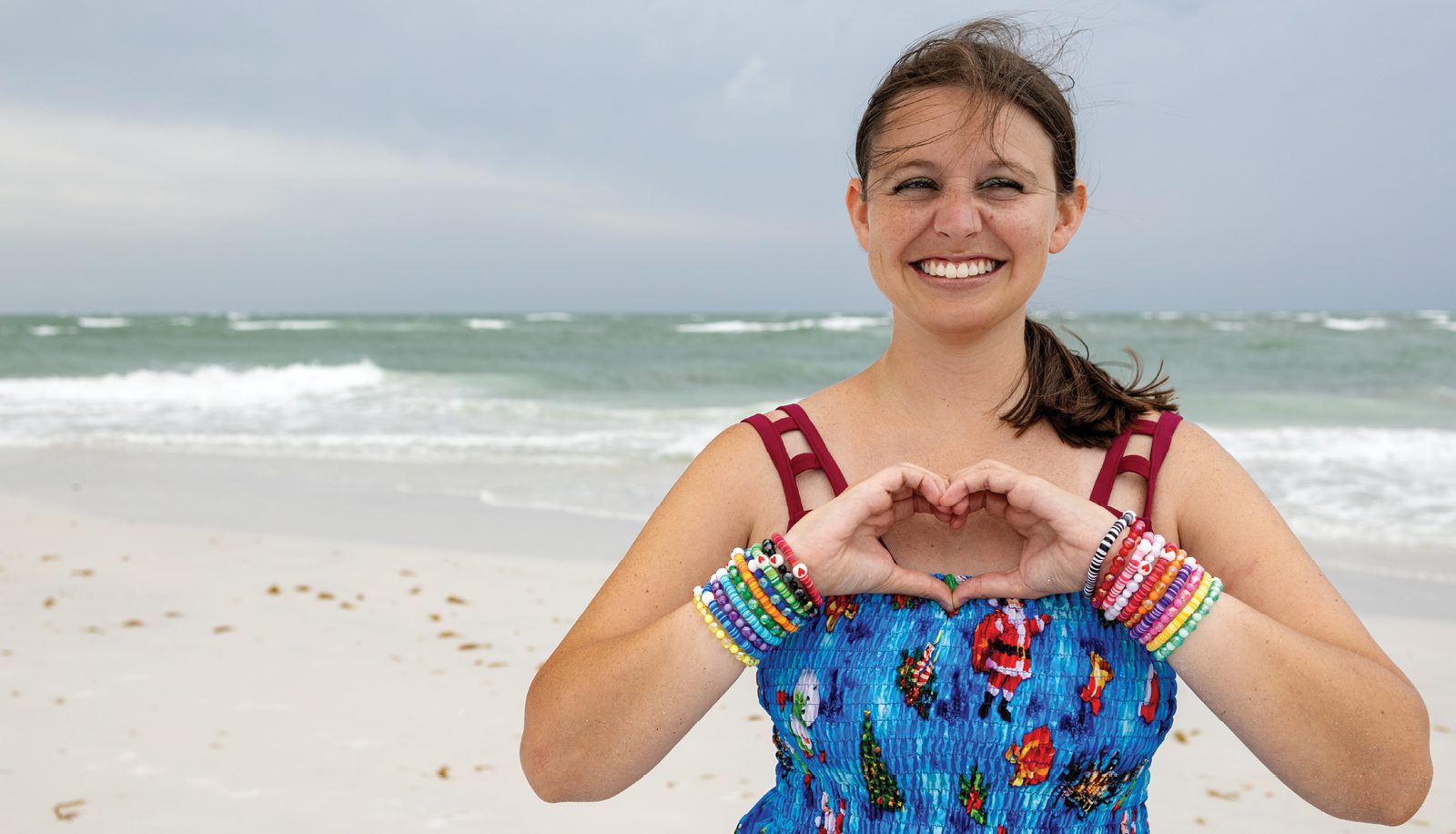
Madison Marilla, who graduated from Western New England University (WNE) in 2020 with a bachelor’s degree in psychology and a minor in art, is a sparkling jewel in WNE’s alumni crown. As one of the newest shining stars from Netflix’s celebrated series Love on the Spectrum U.S., her warmth, candor, and authenticity has captured the hearts of audiences around the world, transforming her into an inspiring voice for inclusion and understanding for the Autism community.
Her journey reflects not only her personal resilience and brilliance but also the encouragement and foundation she found at Western New England, where supportive faculty and a nurturing community helped her build confidence and pursue her dreams. Today, as accolades pour in from her appearance on the show, she continues to embody the spirit of WNE, turning possibility into reality and making a difference far beyond campus.
When Marilla first set foot on Western New England University’s campus, she felt something she had not found with any other collegiate option: a sense of belonging. For her, choosing a college was not just about academics; it was about finding a community where she could be her true self, one that could offer support for every aspect of her life: social, emotional, and academic, “I knew this campus was the right fit the day I visited,” Marilla recalls. “We met with Student Accessibility Services, where they told us about the social and emotional support available. They even arranged for me to have a single dorm room, which made a big difference for me.”
The personal connections that day sealed her decision. She remembers meeting Eddie Ortiz from Campus Events, who showed her the bulletin board full of student happenings, and recalls having the opportunity to sit in on psychology panels. “Everyone was so friendly,” she said, “I could picture myself here.”
During her time at Western New England, Marilla immersed herself in the cosmopolitan campus life. She made friends from across the globe, many from similar backgrounds, and others who introduced her to new perspectives. Her fondest memories center on the themed events that became a staple of her social calendar, “I loved Disney Night, Carnival Night, and all the holiday events—the Christmas and Halloween activities, even the psychic fair,” she shared with a smile. She also poured her heart into Autism Awareness Week with the Community Service Club, selling her handmade jewelry to raise money for autism awareness, “It meant so much that everyone on campus came to support!”
Those experiences, paired with her warm and outgoing nature, allowed her to form friendships with people across every corner of campus, from student-athletes and theater students to members of the Diversity Club and Gender/Sexuality Alliance (GSA), “The president of the Diversity Club once told me she loved how I showed up to all their events and asked me to help plan some of them,” Marilla reflects on proudly.
Marilla’s choice of psychology as a major was deeply personal. Her journey began in high school, working with children with autism and other special needs through Sudbury Parks and Recreation’s Adaptive Sports & Recreation program, formally known as Aspirations, “I was working with kids in kindergarten through eighth grade—doing art therapy, yoga, music therapy, sports,” she explained. “Sometimes I’d even go to their homes, play board games, help with eye contact, or try new foods. Those experiences made me realize I wanted to do this as a career. I wanted to understand why autistic people behave the way they do.”
At Western New England, the psychology department offered the perfect fit, with special education courses and applied behavior analysis programs. Her professors encouraged her active participation, especially in classes like Developmental Psychology. Her participation was so great that her educators sometimes had their work cut out for them, “Professors would call on other students because I always raised my hand,” she laughed.
The university’s flexibility made an enormous difference to her success. Dean Brown and Assistant Dean Martini recognized her strengths as a hands-on learner. When certain courses proved difficult, they transformed them into independent studies tailored to her needs, “I would read the material and then discuss it one-on-one with a professor,” she explains. “That kind of support showed me they really cared about me as a person, not just as a student.”
College was a turning point for Marilla; it offered her the first steps toward true independence. She learned to advocate for herself, whether by visiting professors during office hours, going to the Academic Success Center, or asking for help when she needed it, “I cooked my own food, bought my own groceries, and built the confidence to live on my own,” she shared. She also discovered the joy of building relationships with resident assistants (RA), peer advisors (PA), and staff across campus, “I’d sit with RAs on duty at night, making jewelry and just chatting,” she recalls.
Graduation, though unusual because of COVID-19, was still memorable. She remembers the slideshow of seniors presented by President Emeritus Anthony S. Caprio and the alumni weekend that brought her class together for a formal event and brunch, “It wasn’t traditional, but it was still special,” she says. Most importantly, it was proof of her resilience, “Not many autistic people go to college, let alone graduate. Earning my bachelor’s degree meant the world to me.”
Since graduation, Madison has continued her mission to help others. She worked as a special education paraprofessional at Nathaniel Morton Elementary School, becoming the school’s first autistic teacher, “I worked with students on reading, math, and writing,” she said. “I also created engaging academic games and sensory activities. During MCAS testing (Massachusetts’ annual standardized test), my room became a space for kids to take breaks with activities like making slime, stress balls, or bracelets.” She also worked with students who were learning English as a second language (ESL), helping many Portuguese-speaking children learn English through arts and crafts.
Her creativity and compassion did not stop there. A lifelong jewelry maker, she started crafting at age 10 and began selling her pieces at 14—later turning her passion into Madizen® Jewelry. Using the platform she gained from appearing on the Emmy-winning Netflix series Love on the Spectrum U.S., she launched her own online store, “My brother helped me build the website, MadizenUSA.com, and it’s been amazing to share my work with more people,” she says.
Meanwhile, her dreams are still growing. With a psychology degree and an art minor, she hopes to one day pursue a master’s degree in art therapy, “I love making jewelry, sewing, drawing, and painting,” she says. “I’d love to use those skills to help people with special needs, whether they’re kids, teenagers, or adults.” Her goal reflects the same compassion and creativity that guided her during her time at Western New England and beyond, “Making connections with people and helping them feel special, that’s what I want to do.”
Reflecting on her journey, Marilla has clear advice for incoming students, “Ask for help. Go to your professors’ office hours, visit the Academic Success Center, and use the Math and Writing Centers. Those resources will help you so much.” She also encourages students to step outside their comfort zones, “Get involved on campus. Keep an open mind. Don’t be afraid to meet people, talk to your RAs, or build relationships with your professors. Just live life.”
For graduating seniors about to embark on their own journey, she offers more pieces of wisdom, “Use the Career Center. Put your résumé out there. Take everything you’ve learned in college and apply it to the real world. That’s what helped me.”
From her first day on campus to her fame today, Marilla’s story is one of resilience, support, and community. Western New England did not just provide her with an education; it gave her a foundation to build a meaningful, independent life, “College was my first step to independence,” she says. “It taught me how to ask for help, how to live on my own, and how to believe in myself. Western New England gave me the confidence to spread my wings.”
And for Madison Marilla, those wings are carrying her into a sparkling future filled with creativity, success, and the kind of positive impact that will inspire others, especially those in the Autism community.
